
Boston T-bone Accident Lawyer
Injured in a T-bone accident in Boston, MA? Contact the top Boston T-bone accident lawyer to seek justice and compensation.
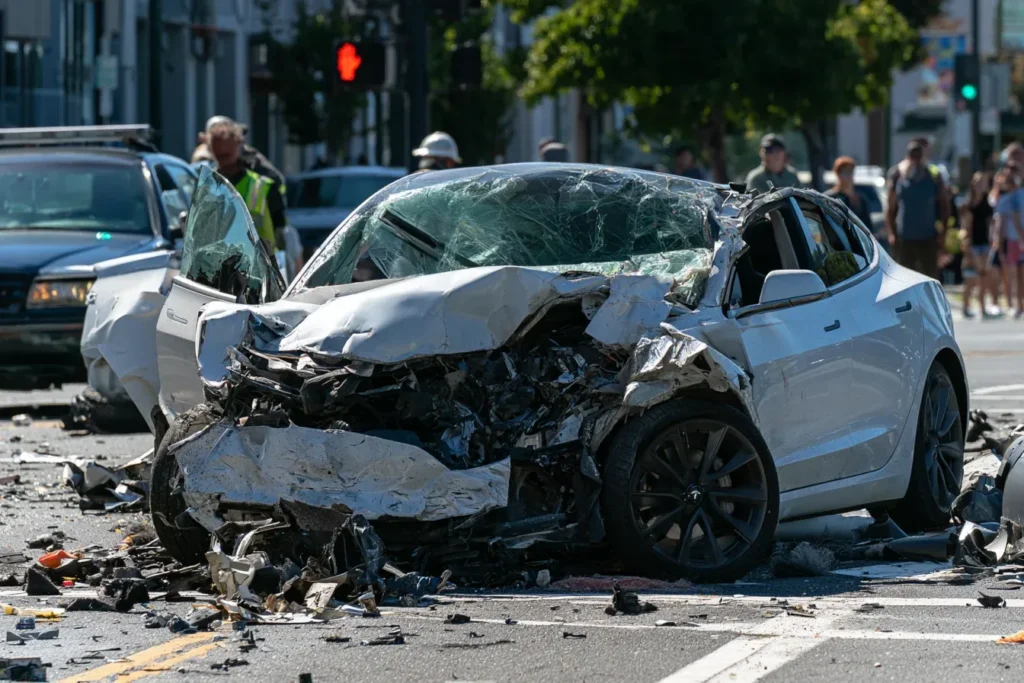
A T-bone crash at a Boston intersection is rarely a fender-bender. When one driver blows a light on Massachusetts Avenue, misjudges a left turn in Kenmore Square, or rolls a stop sign in a residential neighborhood, the people in the struck vehicle absorb the full force of the impact through a door that was never designed to protect them. Broken ribs, pelvic fractures, head trauma, and spinal injuries are the predictable results. Victims face surgery, weeks away from work, and mounting bills while the insurance company already has its own lawyers working to limit what they recover.
The auto accident attorneys at Breakstone, White & Gluck represents people injured by T-bone accidents in Boston, MA. Our three founding partners personally handle every case we accept. We investigate side impact crashes the way we try them: with urgency, with the right experts, and with a clear plan to prove exactly who had the right of way and why the other driver didn't. With more than 30 years of experience and recognition from Super Lawyers, Best Lawyers, and Martindale-Hubbell, we prepare every T-bone case as if it is going to trial.
Contact us today for a free consultation and discover how our T-bone accident attorneys in Boston can help you seek the compensation and justice you deserve.
Why Hire Breakstone, White & Gluck for T-Bone Accident Claims in Boston, MA
We have recovered more than $400 million for clients across Massachusetts, practicing exclusively in personal injury for more than 30 years. We do not accept every case, only the ones we are confident we can win, and we prepare every one as if it is going to trial.
Motor vehicle results:
- $1.1 Million: Left-turning pickup truck hit a front-seat passenger, causing a femur fracture, fat embolism, and PTSD
- $56 Million: 78-year-old Newburyport man catastrophically injured in a head-on collision with an Amazon delivery van
- $10.9 Million: Multiple-vehicle highway collision in a construction zone causing a spinal cord injury
When you hire our firm, one of the three founding partners (Marc Breakstone, David White, or Ronald Gluck) personally handles your case from the first call through final resolution. You will never be handed to a junior associate or passed between paralegals you have never met.
All three partners hold the AV Preeminent rating from Martindale-Hubbell, the highest designation for legal skill and professional ethics. Marc Breakstone and Ronald Gluck serve as Governors of the Massachusetts Academy of Trial Attorneys. David White served as President of the Massachusetts Bar Association. All three are consistently named to the Top 100 Super Lawyers list in Massachusetts and New England.
We don't advertise on billboards or television. Our verdicts, settlements, and 30-year reputation speak for themselves.
Trial Preparation That Moves Insurers
We treat every case as trial-ready from the day we take it, not as a fallback, but as a deliberate strategy. Our attorneys use advanced digital trial technology, interactive exhibits, and computer reenactments to help juries understand complex injuries and liability issues.
Insurance companies negotiate differently when they know a firm will actually try the case. That preparation is why our outcomes consistently exceed what clients were offered before they called us.
“Marc is a skilled professional…When my case required attention Marc kept me focused and informed. When my case required tough negotiating, Marc delivered.” – Bob Powell
Who Pays Your Medical Bills in Massachusetts?
Massachusetts is a no-fault insurance state. Regardless of who caused the crash, your own auto policy pays your initial medical bills through Personal Injury Protection, called PIP.
- PIP covers: Up to $8,000 per person for medical expenses and 75% of your lost wages combined, paid directly by your own insurer.
- With health insurance: PIP pays the first $2,000 of medical bills, and your health insurance then becomes the primary payer for ongoing treatment. PIP then covers copays, deductibles, and remaining out-of-pocket costs up to the policy cap.
- Pain and suffering: Once reasonable medical bills exceed $2,000, or if your injury involves a fracture, permanent and serious disfigurement, loss of a body member, or loss of sight or hearing, you may file a separate claim against the at-fault driver for pain and suffering.
We manage every insurer communication and paperwork obligation from day one. Your job is to get better.
Who Is at Fault in a T-Bone Crash?
The driver who violated the right-of-way bears responsibility. In most T-bone accidents, that means the driver who ran the light, ignored the stop sign, or turned left across oncoming traffic without yielding.
At Boston intersections, we see these same failures repeatedly:
- Running red lights or late-stage yellow lights at full speed
- Rolling stop signs without fully stopping
- Left turns made into oncoming traffic without waiting for a safe gap
- Distracted driving: phone use, GPS adjustment, or general inattention
- Driving while impaired by alcohol or medication
Massachusetts uses a modified comparative negligence rule. You can still recover damages even if you share some fault, as long as your share is 50% or less. Your total recovery will be reduced proportionally by that percentage. Proving the other driver's negligence clearly is critical, and it is exactly where we direct our investigation.
One pattern we consistently see in Boston T-bone claims is a fight over the color of the light. At busy signalized intersections along Massachusetts Avenue, Blue Hill Avenue, and Commonwealth Avenue, both drivers often tell the responding officer they had the green. Adjusters use that conflict to argue shared fault and reduce the payout under Massachusetts comparative negligence rules. We answer it with signal timing records from the Boston Transportation Department, nearby camera footage, and EDR speed data, so the case turns on evidence instead of memory.
What Evidence Proves a T-Bone Claim?
Most T-bone cases come down to a single question: who had the right-of-way? The answer lives in physical and electronic evidence that can vanish within days of the crash.
Surveillance and Traffic Camera Footage
As soon as you contact us, we work to locate every camera that could have recorded the intersection. We send legal preservation demands, formal notices requiring footage to be saved rather than erased, to businesses, property owners, and the city.
Event Data Recorder Analysis
Every modern vehicle contains an Event Data Recorder, or EDR, the automotive equivalent of a flight data recorder. It captures speed, braking force, and steering inputs in the seconds before a crash.
We demand EDR data from both vehicles immediately and send spoliation letters, formal legal demands requiring the other side to preserve this evidence rather than allow it to be destroyed or lost.
Accident Reconstruction Experts
When liability is contested, we retain engineers who use vehicle damage patterns, road geometry, and physical evidence to reconstruct the crash with precision. When a case goes to trial, we can present their findings through computer reenactments and interactive exhibits that help juries understand how the crash happened.
What we see across the side impact claims we handle in Boston is that the most useful footage rarely comes from a city camera. It usually comes from a corner store, a gas station, or an apartment building facing the intersection, especially along busy corridors like Dorchester Avenue and Columbia Road. Many of those private systems record over themselves within a few days. That is why we put preservation letters in the hands of nearby property owners right away, before the footage disappears.
What Compensation Can You Recover?
| Damage Type | What It Covers |
| Medical Expenses | Emergency care, surgery, hospitalization, and future treatment |
| Lost Wages | Income you could not earn during your recovery |
| Loss of Earning Capacity | Reduced future earnings from permanent injuries |
| Pain and Suffering | Physical pain, emotional distress, and loss of enjoyment of life |
| Loss of Consortium | Impact on your marriage and family relationships |
T-bone crashes produce some of the most disabling injuries we handle: fractured pelvises, spinal cord damage, traumatic brain injuries, and traumatic amputations. For cases involving permanent injury, we build claims that account for a lifetime of future care and lost earning power, not just the bills already in hand.
In our experience handling T-bone cases in Boston, clients taken to Boston Medical Center, Mass General, or Beth Israel Deaconess after a side impact crash are usually diagnosed with rib or pelvic fractures in the emergency department, while a brain injury or shoulder tear surfaces weeks later. Insurers routinely point to that gap to argue the later injury came from something else. We work with treating physicians to tie each diagnosis to the mechanics of a side impact, so future care and lost earning capacity are fully documented before settlement talks begin.
What to Do after a T-Bone Accident
What you do in the immediate aftermath can influence both your physical recovery and the strength of your case. Take these steps immediately.
Get Medical Attention the Same Day
T-bone crashes routinely cause traumatic brain injuries, spinal damage, and internal bleeding that feel minor, or even invisible, right after the crash. See a doctor the same day, even if you walked away. Any gap in treatment gives the insurance company grounds to argue that your injuries came from something other than the collision.
Document the Scene before Vehicles Are Moved
If you are physically able, photograph everything before cars are moved:
- Both vehicles where they came to rest after the crash
- Damage at each specific point of impact
- Traffic signals, stop signs, and lane markings at the intersection
- Skid marks, debris, and nearby property damage
Note whether any businesses or homes near the intersection have exterior cameras. Surveillance footage is routinely overwritten within days. Also save every medical bill, prescription receipt, and out-of-pocket expense from the date of the crash. These records form the foundation of your economic damages claim.
Do Not Give a Recorded Statement
The other driver's insurance company will call within a day or two and ask you to walk through what happened, on the record. Decline. Their goal is to find something in your words that justifies paying you less. Call us before you say anything to any insurer.
How Long Do You Have to File in Massachusetts?
You have three years from the date of the crash to file a personal injury claim under Massachusetts law. That window may be shorter if a government vehicle, MBTA bus, or state employee was involved. Certain claims against public entities require written notice within two years.
Evidence fades and witnesses disappear long before the legal deadline. Call us as soon as possible.
“I knew that Ron had my best interests at heart, and that I could trust him to help me make the right decision.” – Katelyn Ludwig
What It Costs to Hire Us
You pay nothing unless we win your case.
We also advance all costs, so no financial pressure forces you into an early settlement. If your injuries make it difficult to travel, a partner will come to you at home or in the hospital.
Call (800) 379-1244 or contact us to schedule a free consultation. There is no obligation.
“There is no question about this: If any family member or friend needs a great lawyer, I will refer them to David White.” – Walid Dehni
Do You Have a T-Bone Accident Case?
A T-bone collision, also called a side impact crash, happens when the front of one vehicle slams into the driver or passenger-side door of another. The door panel offers almost no structural protection against a direct hit, which is why these crashes so often produce catastrophic, life-altering injuries.
If another driver ran a red light, blew through a stop sign, or turned across your path without yielding, you have the right to hold them fully accountable. You should not be facing the insurance company's lawyers alone.
Hurt in a side impact crash? Call Breakstone, White & Gluck at (800) 379-1244.
Boston T-Bone Accident FAQs
What Injuries Are Most Common in T-Bone Crashes?
Side impact crashes most often cause rib fractures, pelvic injuries, traumatic brain injuries, spinal cord damage, and shoulder tears because the car door offers almost no structural buffer against a direct hit. Soft tissue injuries to the neck and lower back are also extremely common.
Can I Recover Damages if the Crash Happened at an Unmarked Intersection?
Yes. Massachusetts right-of-way rules apply even without traffic signals or stop signs. We establish fault by identifying which driver entered the intersection first and which had a legal duty to yield.
What Should I Do if the Other Driver's Insurer Denies My Claim?
A denial is not final. We challenge it with the evidence we have built, including surveillance footage, EDR data, and expert analysis, and file suit if the insurer refuses to negotiate in good faith.
Can I File a T-Bone Claim if the At-Fault Driver Had No Insurance?
Yes. Massachusetts law requires all drivers to carry Uninsured Motorist coverage. If the at-fault driver had no insurance or fled the scene, we pursue your damages through your own policy.
Does Airbag Deployment Affect the Value of My Claim?
Airbag data stored in the vehicle's EDR confirms the force of impact and directly supports the severity of your injuries. We use it alongside your medical records to show why your injuries required the treatment they did.
How Long Does a T-Bone Accident Case Take in Massachusetts?
The timeline depends on the severity of your injuries, how long your treatment lasts, and whether the insurer negotiates in good faith. Cases involving permanent injury or those that proceed to trial often take longer. We settle when the number is right for you, not when it is convenient for us to close the file.