
Boston Jackknife Accident Lawyer
Injured in a jackknife accident in Boston, MA? Contact the top Boston jackknife accident lawyer to seek justice and compensation.
A jackknifed tractor-trailer on the Mass Pike, I-93, or I-495 can sweep across three lanes in seconds, and the people in passenger vehicles rarely walk away unharmed. The weight disparity is staggering: a loaded commercial truck can weigh eighty thousand pounds, compared with a four-thousand-pound sedan. The injuries that follow are often life-altering: spinal cord damage, traumatic brain injury, multiple fractures, and amputation. Fault often reaches beyond the driver to the trucking company, the shipper, or a parts maker, and each one has an insurance company working to limit what you recover.
The experienced truck accident attorneys at Breakstone, White & Gluck has represented catastrophically injured clients across Massachusetts for more than three decades. We know how commercial carriers and their insurers build a defense in the first forty-eight hours, and we know how to dismantle it. Every client is represented directly by one of our three founding partners, and we prepare every case for trial.
Get a free consultation and discover how our truck accident attorneys in Boston can help you seek the compensation and justice you deserve.
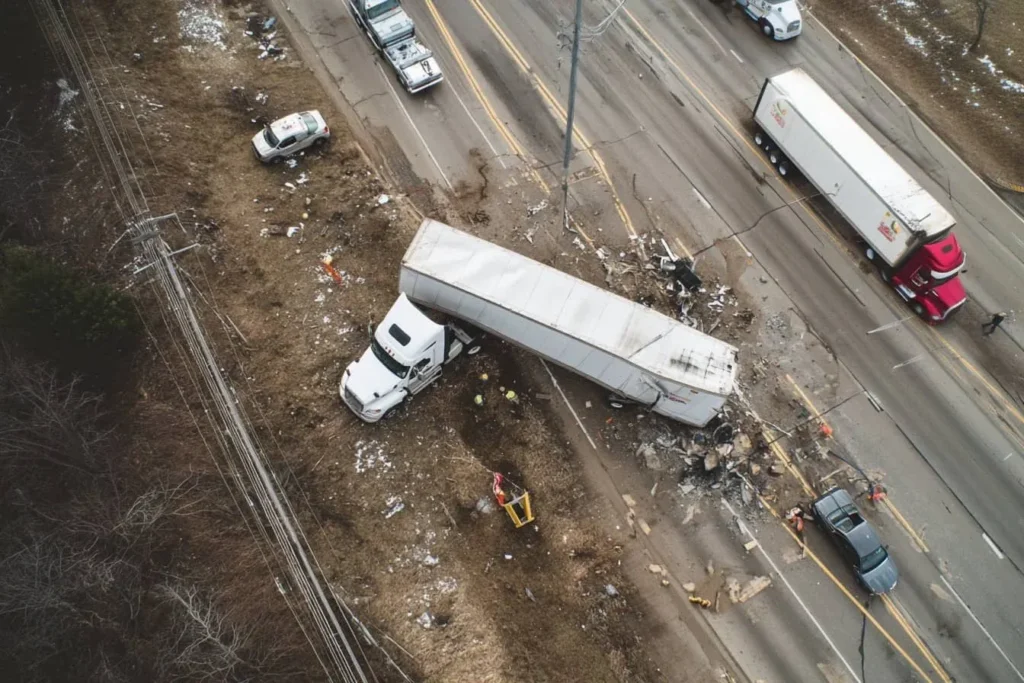
What Causes a Jackknife Crash?
A jackknife accident occurs when the cab of a tractor-trailer and its trailer fold sharply at the hitch, forming an acute angle, like a closing pocketknife. It happens when sudden braking causes the trailer's rear wheels to lock before the cab stops, sending the trailer swinging sideways across adjacent lanes. Other drivers have almost no time to react, which is why these crashes produce some of the most catastrophic injuries we see on Massachusetts roads.
Driver error is a common cause. Sudden, hard braking at highway speeds, especially on wet or icy roads, forces the rear trailer wheels to lock before the vehicle stops cleanly. Other contributing factors include:
- Excessive speed through downhill grades or highway interchanges
- Brake failure or worn tires from deferred fleet maintenance
- Cargo that shifts in transit because it was improperly secured or exceeded legal weight limits
- Driver fatigue from violations of federal Hours-of-Service (HOS) rules, which limit how many hours a trucker can drive before taking required time off.
Identifying the root cause is the foundation of your claim. It determines not just who was negligent, but how many parties share liability for your injuries.
One pattern we consistently see in Boston jackknife claims is that the trailer folds where traffic stops without warning, such as the Braintree Split where I-93 meets Route 3, the merges along the Southeast Expressway, or the backups near the Mass Pike interchanges. A truck running too fast for that stop-and-go traffic brakes hard, the trailer wheels lock, and the trailer swings across lanes before the cars behind it can react. Carriers often blame a slick road or a car that cut in front of the truck. The truck's own speed and braking data is usually where we start testing that story.
Who Is Liable for a Jackknife Accident in Massachusetts?
Jackknife cases routinely involve multiple at-fault parties. Finding every responsible defendant is essential to recovering the full value of what you have lost. Liability can reach:
- The truck driver: Reckless, inattentive, or fatigued operation that caused the loss of trailer control
- The trucking company: Responsible for its driver's conduct on the job, and for its own failures in hiring, training, and vehicle maintenance
- The cargo shipper or loader: A trailer that is overloaded or unevenly balanced is inherently unstable, so the company that loaded it can be held accountable
- A parts manufacturer: Defective brakes, tires, or anti-lock braking systems can support a product liability claim
- A government entity: Unsafe road design or failure to maintain safe road surfaces can implicate a public body. Claims against government defendants under the Massachusetts Tort Claims Act require written notice within two years, and claims over a defect in a public road can require written notice within 30 days under M.G.L. c. 84, § 18.
What we see across the jackknife claims we handle in Boston is that the carrier's first explanation rarely accounts for how the trailer was loaded. Many of these trucks haul freight to or from the Conley Container Terminal in South Boston or the distribution centers along Route 128 and I-495, and the bill of lading and weight records show who loaded the trailer and how heavy it was. When those records point to an overweight or unbalanced load, we look at adding the shipper as a defendant so its insurance coverage is available alongside the carrier's.
What to Do after a Jackknife Crash in Boston
The 24 to 48 hours after the accident have a direct impact on your health and on your ability to recover full compensation.
Seek medical care first. Traumatic brain injuries, internal bleeding, and spinal damage frequently show no symptoms at the scene. A same-day medical record is essential evidence. Any delay will be used by the defense to argue your injuries were not serious.
Document the scene. Photograph the jackknifed trailer, skid marks, your vehicle, and the DOT identification number on the truck's cab. Get names and contact information from every witness you can find.
Say nothing to the trucking company's insurer. Commercial carriers send claims investigators to serious crashes within hours of impact. They are not there to help you. Do not give a recorded statement or sign anything without a lawyer.
Preserve electronic evidence before it disappears. The truck's black box data can be lost or overwritten if it is not preserved quickly. The moment we are retained, we send a legal preservation demand that obligates the carrier to hold all evidence, or face serious legal consequences.
What Evidence Wins a Jackknife Case?
These cases are built on physical and electronic evidence, and the most critical data disappears fast. We move immediately to secure:
- ECM and ELD data: The truck's Electronic Control Module (ECM) can record speed, brake use, and engine activity around the time of the crash. The Electronic Logging Device (ELD) captures driving hours, which can prove the driver exceeded federal fatigue limits.
- Dashcam and traffic camera footage: Video from the truck's cab and nearby highway cameras can show exactly how the trailer began swinging before it struck your vehicle.
- Maintenance and inspection records: FMCSA regulations require carriers to keep inspection, repair, and maintenance records for each truck, and drivers must file written inspection reports listing any defects they find. These records frequently reveal brake or tire defects the company knew about and chose not to fix.
- Cargo documentation: Load weight and distribution records establish whether improperly loaded freight destabilized the trailer before the crash occurred.
We work with leading accident reconstruction experts to analyze this data. When a case calls for it, our attorneys use advanced digital trial technology, interactive exhibits, and computer reenactments to help juries understand how the driver's negligence caused the trailer to sweep into your path.
What Compensation Can You Recover?
A jackknife crash can cost you your job, your health, and your independence. You are entitled to pursue full compensation for every financial and personal loss.
| Economic Damages | Non-Economic Damages |
| Past and future medical bills | Pain and suffering |
| Lost wages and reduced earning capacity | Emotional distress |
| Rehabilitation and long-term care | Disfigurement and scarring |
| Vehicle and property damage | Loss of enjoyment of life |
| Out-of-pocket expenses | Loss of consortium |
If a loved one was killed, Massachusetts law permits surviving family members to bring a wrongful death claim for funeral costs, lost financial support, and the loss of that person's companionship.
“So grateful to Marc for all this help and I would recommend him to anyone in need of a brilliant Personal Injury attorney.” – Rebecca S.
How Massachusetts Law Affects Your Claim
Massachusetts is a no-fault insurance state, which means your own Personal Injury Protection (PIP) coverage pays up to $8,000 in benefits regardless of who caused the crash. If you have health insurance, PIP pays only the first $2,000 in medical bills, and your health plan covers most remaining medical treatment. To sue for pain and suffering, your reasonable medical expenses must exceed $2,000 or your injury must involve a fracture, permanent and serious disfigurement, loss of sight or hearing, loss of a body member, or death.
Under Massachusetts' modified comparative negligence rule, you can still recover damages as long as you are 50% or less at fault, though your award is reduced by your share of responsibility. Federal law requires commercial trucks to carry at least $750,000 in liability coverage, and many carriers hold even higher limits, which is why their insurers contest these claims so aggressively from the outset.
A tactic we see repeatedly from trucking insurers in Boston jackknife cases is a fast settlement call, sometimes while the injured person is still being treated at Boston Medical Center or Mass General. The offer usually arrives before anyone knows whether surgery or months of rehabilitation will be needed, and it rarely reflects a commercial policy that often carries $750,000 or more in coverage. We also see adjusters argue that the car driver was following too closely, because under Massachusetts comparative fault every percentage point they assign to you reduces what they pay.
Why Breakstone, White & Gluck
We don't buy billboards or advertise on TV. Our verdicts, settlements, reviews, and reputation speak for themselves.
When you hire our firm, your case is personally handled by one of our three founding partners: Marc Breakstone, David White, or Ronald Gluck. We are selective about what we accept because every client we represent gets a founding partner, not a junior associate. All three hold the AV Preeminent rating from Martindale-Hubbell, the highest designation for legal ability and ethical standards, and have been consistently named Top 100 Massachusetts and New England Super Lawyers.
We prepare every case for trial from the day we are retained. That means securing the right experts early and building the evidence before we ever sit across the table from an insurer. Our attorneys also use advanced digital trial technology, interactive exhibits, and computer reenactments to help juries understand complex injuries and liability issues. That posture produces stronger outcomes, both in settlement negotiations and at verdict.
We have a proven track record of securing substantial recoveries for our clients. Our results in serious motor vehicle cases include:
- $3.5 million recovery for the family of a motorcyclist killed when a waste disposal truck pulled into his path
- $10.9 million recovery for a client who suffered a spinal cord injury in a multiple-vehicle highway collision in a construction zone
- $7.1 million recovery for a pedestrian who lost her leg after being struck by an MBTA bus in a crosswalk
“Marc is a skilled professional…When my case required attention Marc kept me focused and informed. When my case required tough negotiating, Marc delivered.” – Bob Powell
No Fee Unless We Win
We handle every case on a contingency fee basis. You pay nothing unless we win, and we advance all costs of your case.
How Long Do You Have to File in Massachusetts?
In Massachusetts, you have three years from the date of the accident to file a personal injury lawsuit. Wrongful death claims are subject to the same three-year window, measured from the date of death. Claims against a government entity require formal written notice within two years, and claims over a defect in a public road can require notice within just 30 days. Missing any of these deadlines permanently ends your right to compensation, regardless of how strong your case otherwise is.
Boston Jackknife Accident FAQs
Can I File a Claim against Both the Truck Driver and the Trucking Company?
Yes. We typically name both as defendants: the driver for their negligent operation and the carrier for its own failures in training, supervision, and maintenance, as well as its legal responsibility for the driver's on-the-job conduct.
What Happens If I Was Partially at Fault for the Crash?
In Massachusetts, you can still recover as long as you are found to be 50% or less at fault. Your total award is reduced proportionally by your share of responsibility.
Who Pays My Medical Bills While My Case Is Pending?
Your PIP coverage handles the first $2,000, after which your health insurance typically covers ongoing treatment. Any insurer that paid toward your care will assert a reimbursement lien. We negotiate those liens directly to protect as much of your recovery as possible.
Can the Shipper Be Held Liable If the Cargo Was Improperly Loaded?
Yes. If the trailer was overloaded or unevenly balanced, the company responsible for loading it can be named as a defendant alongside the driver and carrier.
How Long Does a Jackknife Accident Case Typically Take to Resolve?
Every case is different. The timeline depends on the severity of your injuries, how many parties are involved, and whether liability is disputed. Cases with severe injuries or contested fault generally take longer to resolve.
What If the Truck Driver Was Classified as an Independent Contractor?
Courts look past labels. If the carrier controlled the driver's schedule, routes, or working conditions, it can still be held liable, regardless of what the employment agreement says.
Will I Owe My Health Insurer Money after My Case Settles?
In most cases, yes. Health insurers typically assert a lien for what they paid in medical costs. We negotiate those amounts directly with the lienholder to reduce what you owe and maximize what you take home from your settlement.
“I knew that Ron had my best interests at heart, and that I could trust him to help me make the right decision.” – Katelyn Ludwig
Contact Breakstone, White & Gluck
A jackknife crash puts you up against a trucking company, its insurance carrier, and a professional defense team, all of whom began protecting themselves the moment the accident happened. Your job is to get better. Our job is everything else.
Call (800) 379-1244 for a free, confidential case review. Our office is at 2 Center Plaza, Suite 530, Boston, MA 02108, and we represent injured people throughout Massachusetts. You should not be in this fight alone. We will have your back.